

Starting keyword research can feel like standing at the base of a mountain without a map. We all agree that the goal is to find valuable, low-competition keywords, but that first step is often the most paralyzing: where do you even begin?
This guide promises to replace that uncertainty with a clear, straightforward system. By the end, you’ll have a reliable framework for identifying the core ‘seed keywords’ that form the true foundation of a winning SEO strategy.
We will define precisely what seed keywords are, and what they are not; go through a practical, step-by-step process to find them; and explain how they unlock every other keyword opportunity for your website.
What Exactly Are Seed Keywords?
Seed keywords define your niche or business in core words and phrases, which are usually one or two words long. They represent the main topics and categories you focus on. In other words, the seed keywords work like source code for your entire keyword research and not the final, optimized terms that you’ll target in an article.
A common point of confusion is how a seed keyword differs from a “head term.” While they can overlap, their strategic roles are distinct:
Seed Keyword: A starting point for research. It’s a broad reflection of your business offerings, e.g., “dog apparel.” It might or might not be a head term. Its primary job is to be fed into research tools to generate more specific ideas.
Head Term: A high-volume, high-competition keyword that is a final content target. That is, this is the prize you intend to go after once you build up considerable topical authority – ranking for the term “SEO.”
Basic Seed Keywords Formula
The basic formula for a good seed keyword is combining a context with what you offer:
Context/Activity + Product/Need = Seed Keyword
For example, “Hiking” (Context) + “Boots” (Product) = “Hiking Boots” (Seed Keyword).
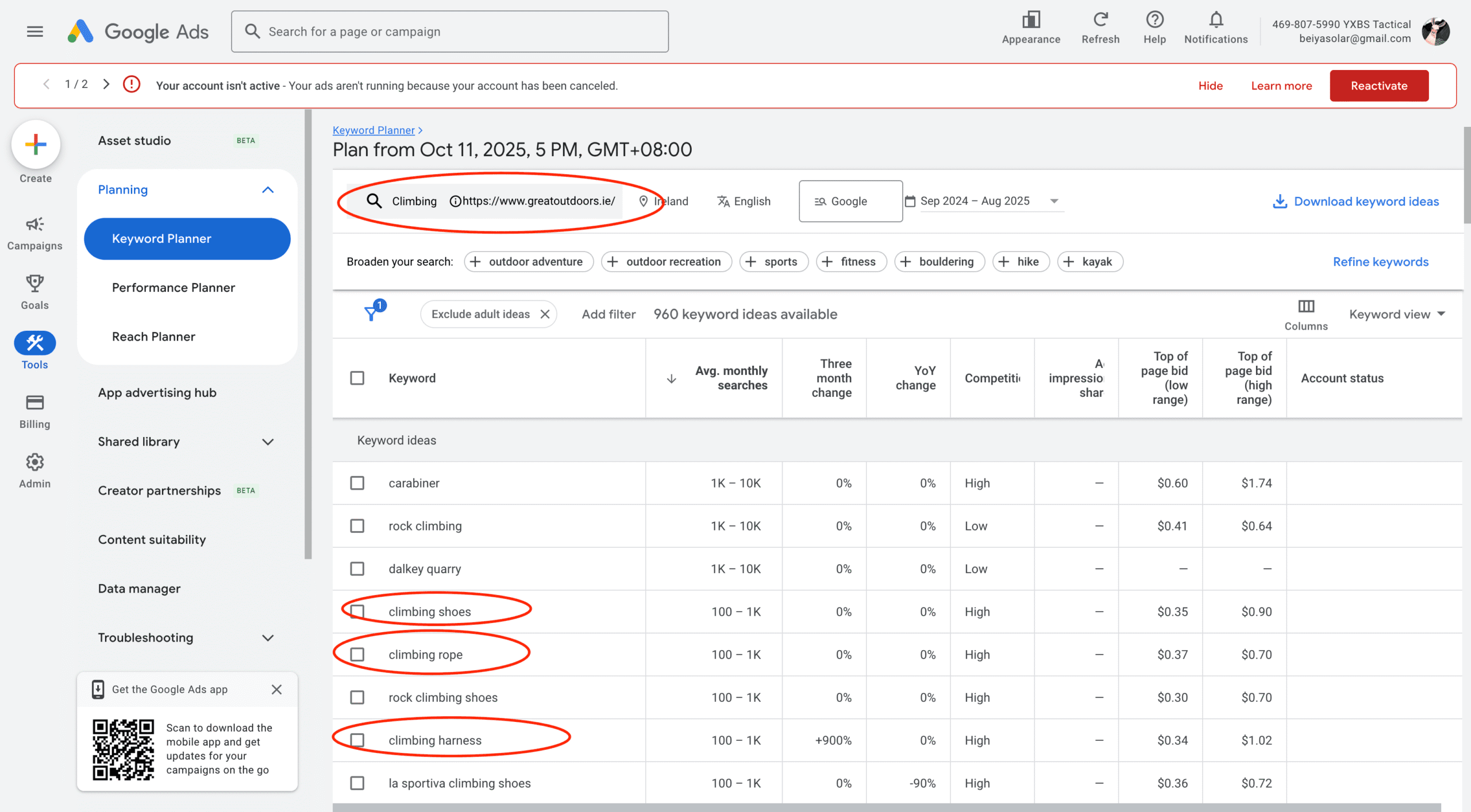
Why Seed Keywords are the Backbone of Your SEO Strategy
The identification of the right seed keywords is not open for negotiation because of the following two important reasons:
- They Form the Foundation: Your entire keyword research plan is built upon them. The quality of your seeds determines the quality of the long-tail and mid-tail keywords you’ll uncover later.
- They Are the Root of Expansion: Every long-tail, intent-driven keyword is part of a more general seed. Through the addition of modifiers-niche, location, or a question-you move a generic seed to a strong, focused phrase.
| Seed Keyword | Medium-Tail Keyword Example | Long-Tail Keyword Example |
|---|---|---|
| Art ideas | Pixel art ideas | How to make pixel art |
| Laptop review | Laptop reviews 2024 | Dell G15 gaming laptop review |
A Practical Workflow for Identifying Your Seed Keywords
Starting with brainstorming, this process ends with data-driven validation.
Brainstorm Your Core Offerings: Based on your industry knowledge, what are the fundamental products or services you provide? Start with your intuition.
Analyze Your Website Navigation: Often, your website menu and categories are a perfect source for seed keywords.
Review Your Current Rankings: What terms are you currently getting traffic for? Those hidden gems can be found via Google Search Console.
Spy on Your Competitors: Analyze what broad terms your competitors are ranking for. This shows how they categorize their offerings.
Validate using SEO Tools-such as SEMrush: This is the most important, final touch. Run your brainstormed list through a tool before committing to check the “keyword overview.” Evaluate the list based on:
- Total Volume: Is there a significant market?
- Total Number of Keywords: Are there enough related terms to build a content cluster?
- Average Keyword Difficulty (KD): Is the landscape realistically competitive? If the average KD is too high, it may be too difficult.
Real-World Example: From “Dog Shirt” to a Content Strategy
Let’s say if you have a company that sells dog shirts.
The two seed keywords your intuition might give you are “dog shirt” and “dog apparel.
A quick check in SEMrush reveals:

- “Dog Shirt”: Total Volume of 285k, 21k related keywords, and an average KD of only 11%. This is a fantastic starting point; loads of opportunity with highly manageable competition.
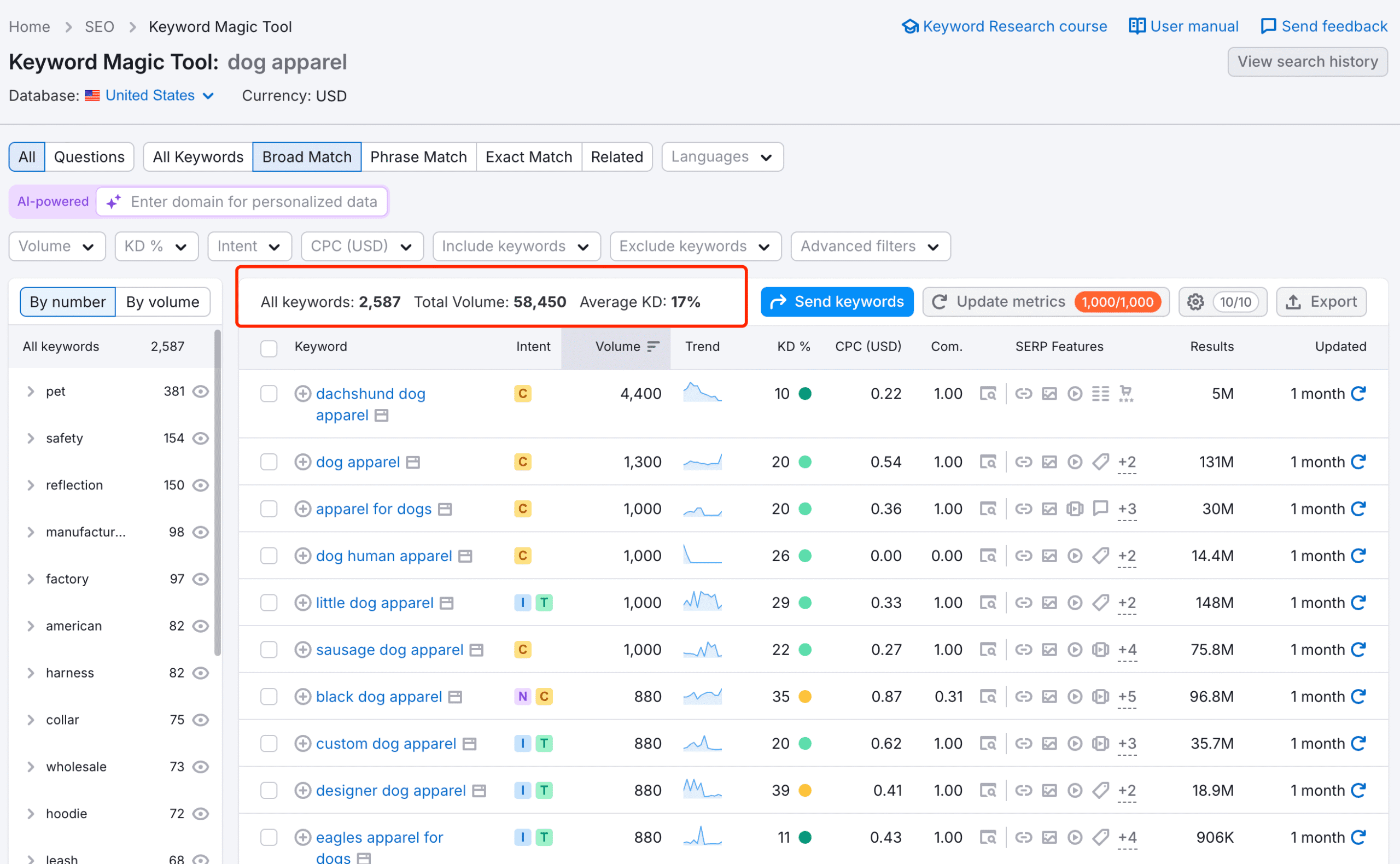
- “Dog Apparel”: Surprisingly, the volume is way lower at 58k. It only had 2.5k keywords, and a higher KD of 17%. It’s still viable, but “dog shirt” remains the better seed term.
Those 2 keywords are perfect for acting as a starter for SEO.
Deliverable: A validated short list of 1-2 powerful seed keywords to guide your research.
The Most Common Pitfall to Avoid
Never treat your seed keywords as primary targets of your content from day one. That’s the single biggest mistake new websites make. Seed keywords are your input for research, not your immediate output to create content. Targeting a high-volume, high-competition term like “marketing automation” (Average KD 65%) right off the bat is a recipe for failure. The true purpose of a seed keyword is to help you discover and find achievable target keywords-the mid-tail and long-tail phrases that you can actually compete for, win, and build up authority enough to one day rank for the bigger terms.
Conclusion:
Sow the Right Seeds for Growth Your seed keywords represent the most important decision you will make in your SEO journey, as they lead to every content you will create and every search query you should target. Starting with a strategic, validated list of broad topics sets the right basis for uncovering high-intent, specific keywords that will bring meaningful traffic to your site. Set this right, and you’re building on rock, not on sand.