
What Are Internal Links?
Unlike external links that direct users to pages outside of your domain, internal links are hyperlinks that point to other pages within the same domain.
There are generally two types of internal links:
- Navigational Links: These are the structural links that form your website’s main navigation, such as menu items, footers, and sidebars.
- Contextual Links: These links are placed within the body of your content (like a blog post) and are used to connect related topics, providing additional context to the reader and search engines.
Why Are Internal Links Crucial for SEO?
Internal links are a cornerstone of a strong SEO strategy for several key reasons.
For Search Engines:
- Content Discovery: They help Googlebot (Google’s web crawler) discover new pages on your site more efficiently.
- Faster Indexing: A logical internal linking structure can help Google index your content more quickly.
- Understanding Content: The structure of your internal links and the anchor text you use provide Google with valuable context, helping it understand what your pages are about and how they relate to each other.
For Your Website’s Authority:
- Distributing Page Authority: When implemented correctly, internal links can pass authority (often called “link juice”) from high-authority pages (like your homepage or popular articles) to other pages. This is fundamental to the pillar-cluster content strategy, where you channel authority from cluster pages to your main pillar page, establishing it as a definitive resource on a topic.
SEO Best Practices for Internal Linking
1. Use Descriptive, Contextual Anchor Text
The anchor text is the clickable text of a hyperlink. Instead of using generic phrases, your anchor text should be descriptive and relevant to the page you’re linking to.
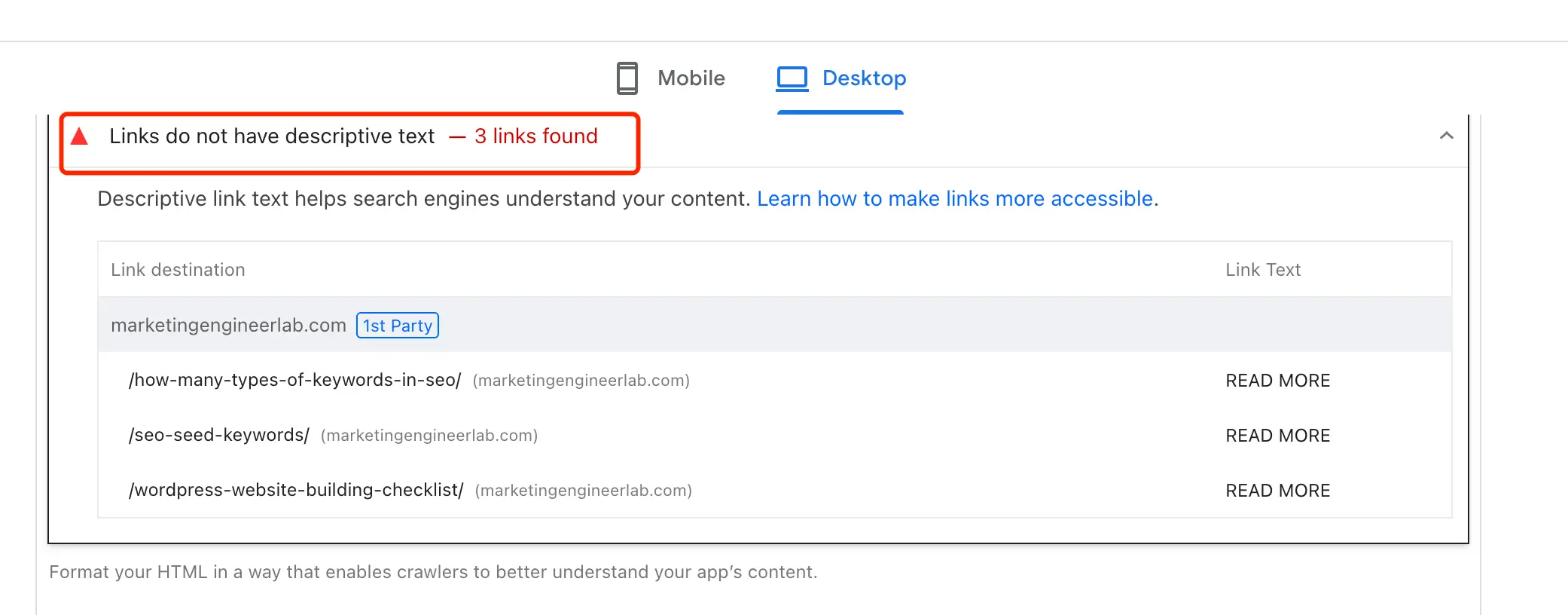
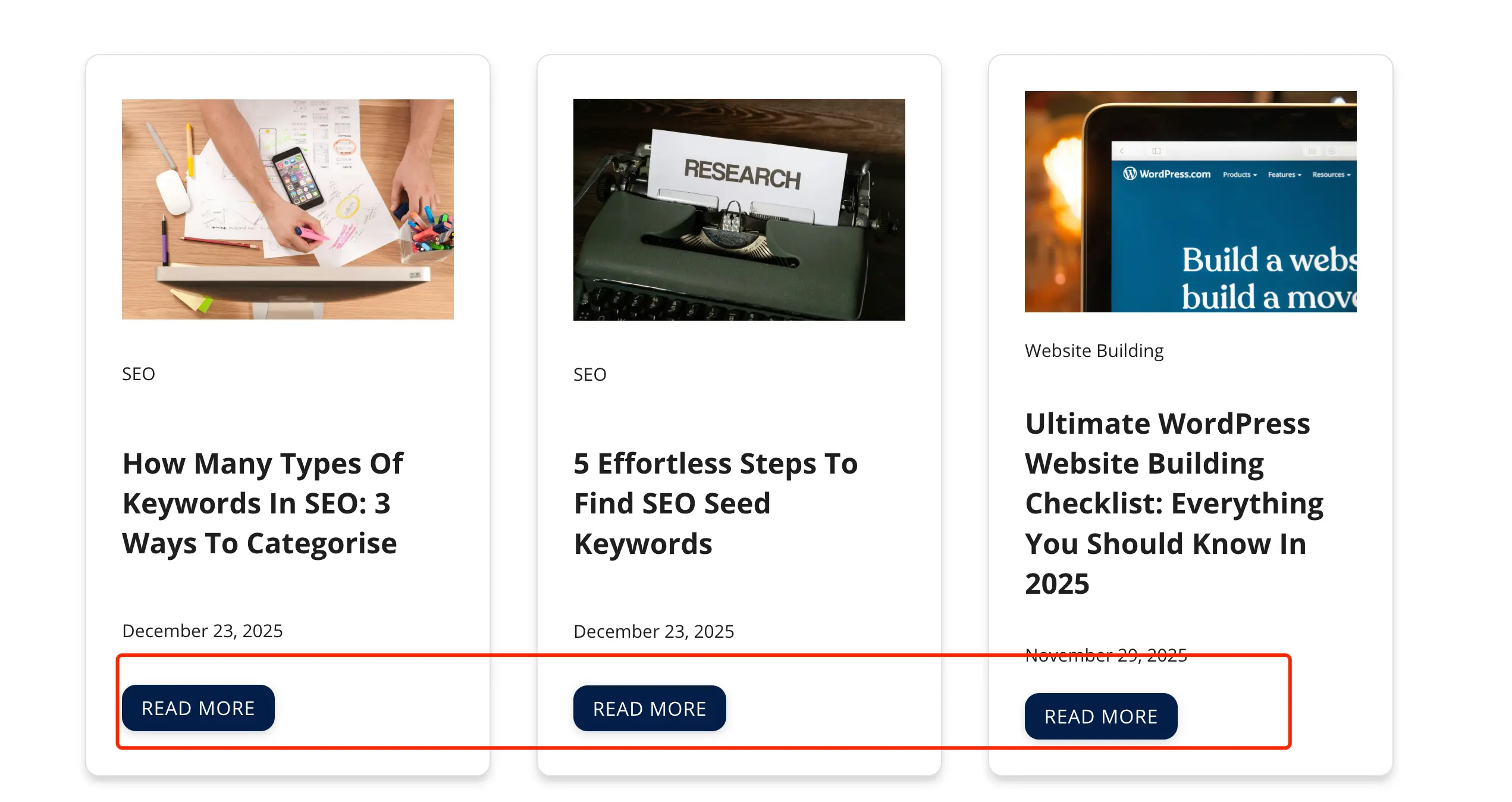
- Avoid Generic Text: Phrases like “click here,” “read more,” or “learn more” provide little to no SEO value.
- Use Descriptive Keywords: For example, instead of “To learn more about keyword research, click here,” a better approach is “Keyword research is a critical first step in any SEO campaign.”
Using non-descriptive anchor text is a common issue flagged by tools like Google PageSpeed Insights, as it fails to provide context to both users and search engines.
2. Strategically Pass “Link Juice”
Links pass authority from one page to another. For a newly established website with low overall authority, a strategic internal linking plan is essential to help Google recognize and rank your most important content.
While backlinks are the most powerful way to build page authority, a smart internal linking strategy can significantly boost your efforts.
Key Strategies for Distributing Authority:
- Identify Your High-Authority Pages: These are typically your homepage, pillar pages, and articles that have naturally attracted backlinks.
- Link From Your Homepage Strategically:
- Link to your most important pillar pages to help them rank for competitive topics.
- Link to your latest articles to give them an initial authority boost.
- Link to your main blog feed to ensure no posts become “orphan pages” (pages with no internal links pointing to them).
- Link From Other High-Authority Pages:
- Link from pillar pages down to their related cluster pages to create a strong topic cluster.
- Link between relevant cluster pages where it makes sense for the user, reinforcing the topical relationship.
Frequently Asked Questions (FAQ)
Here are answers to some common questions about internal linking.
Q1: Should I use “dofollow” or “nofollow” for internal links?
You should almost always use standard “dofollow” links for internal linking. The rel="nofollow" attribute tells search engines not to pass any link equity (authority) through that link, which defeats one of the main purposes of internal linking. Reserve “nofollow” for specific cases, such as user-generated content or paid links.
Q2: How many internal links are too many on one page?
There is no magic number, but the best practice is to be reasonable and user-focused. Ask yourself: “Is this link genuinely helpful to the reader?” A page cluttered with hundreds of links can appear spammy and degrade the user experience. A few dozen well-placed, relevant links are far more valuable than a hundred irrelevant ones.
Q3: Should I use the exact same anchor text every time I link to the same page?
It’s generally better to vary your anchor text naturally. While you should use your target keyword in the anchor text, you can also use variations, synonyms, or long-tail versions. This looks more natural to Google and can help the page rank for a wider range of related terms. For example, you could link to a page about “content marketing” using anchors like “content marketing strategy,” “guide to content marketing,” and “creating effective content.”