
What is Seasonal SEO?
Seasonal SEO is optimising websites for satisfying demands in specific time-sensitive periods, including seasonal trends, holidays, and events, to capture surges in search traffic.
While some industries, like real estate and SaaS, remain stable year-round, most businesses are highly affected by seasonality, such as fast fashion, outdoor gear, and travelling services.
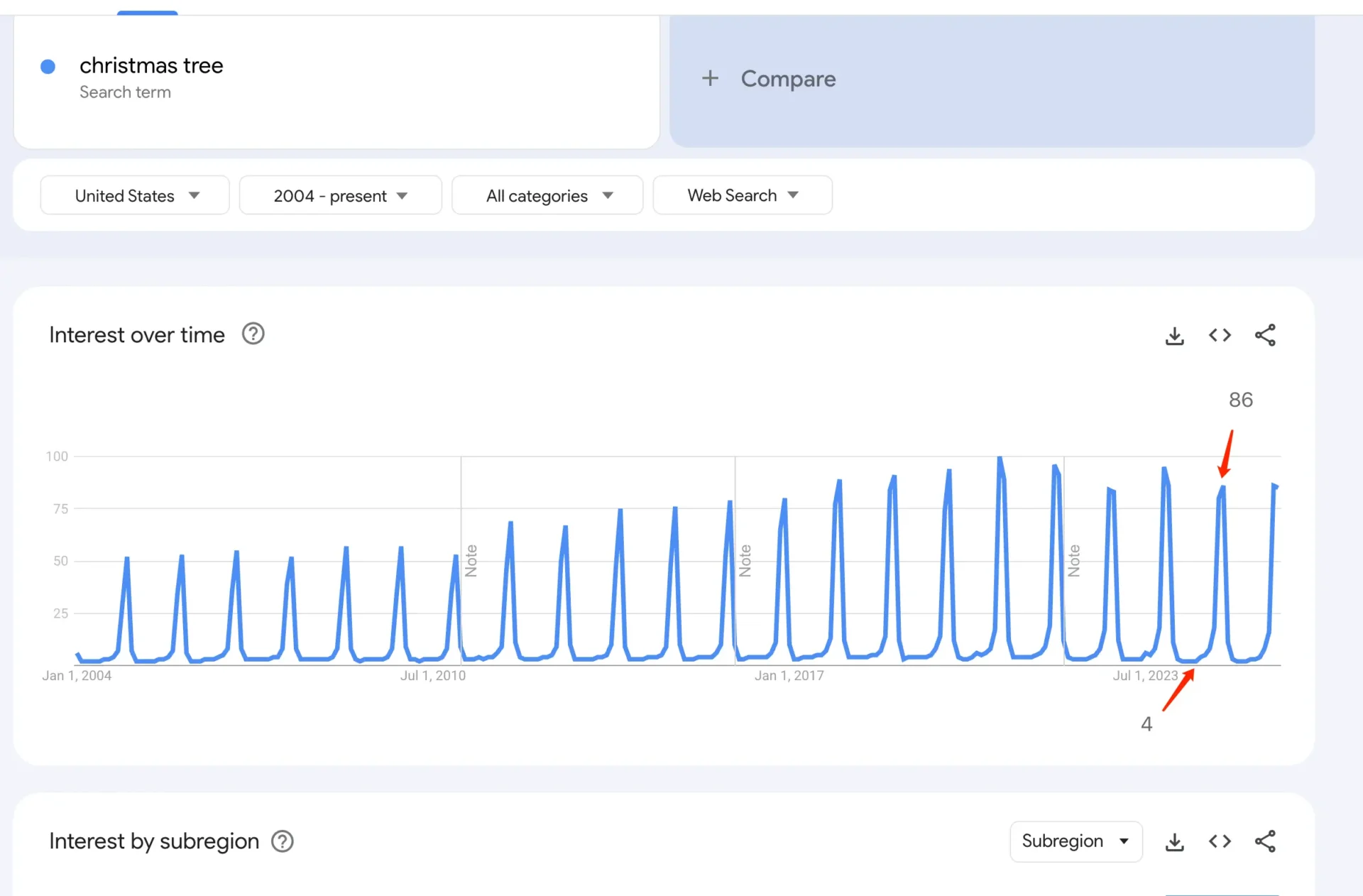
There is an extreme example that can illustrate it – the Christmas tree
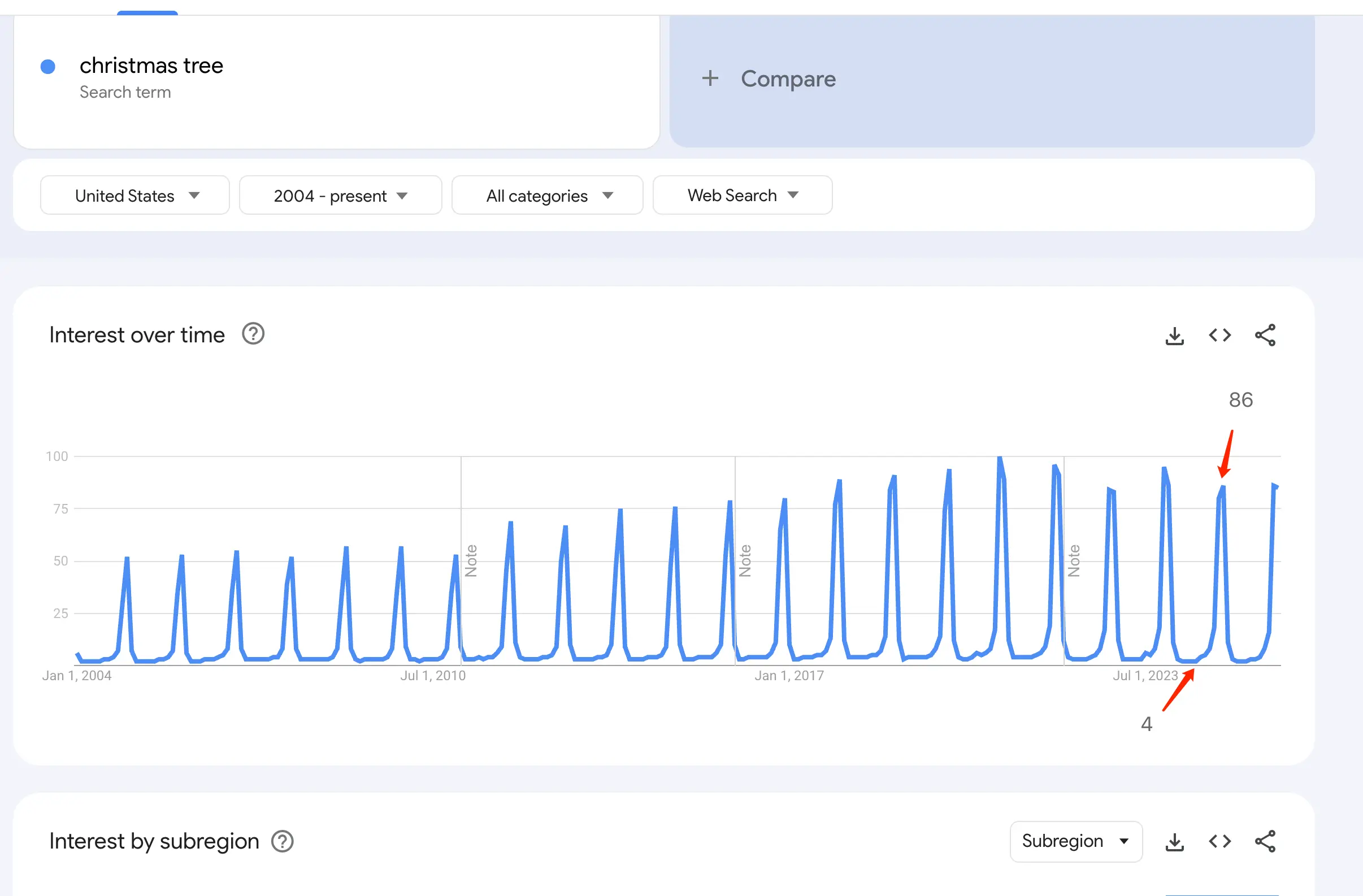
Throughout the whole year, the search interest value remains relatively low (2-4), which means few people show interest in the search term of Christmas Tree.
But when it comes to November, there would be a steep surge from 8 directly to 86, because people are preparing for the Christmas Holiday at that time and they need some decorations in their house.
Evergreen SEO vs seasonal SEO: what’s the difference
Unlike evergreen SEO (general SEO), which targets keywords stable in demand, seasonal SEO is highly time-sensitive.
- evergreen SEO: Focusing on building a foundation of authority that grows steadily year-round.
- Seasonal SEO: Focuses on capturing seasonality demand to drive more traffic to websites in a limited period of time.
Key steps of Seasonal SEO?
Seasonal SEO is the overarching strategy that encompasses several specific tactics. The key components are shown as below:
- Seasonal keywords research: Identifying the time-related search terms you plan to target. (Black Friday deals 2025, Summer Dress)
- Planning and promoting in advance: at least leave 3 months beforehand for promoting your content for events or trends
- Seasonal Content Creation: Either build a new dedicated page or update your outdated page, implementing seasonal keywords into your content creation.
- Internal Linking Building: Adjusting the internal link structure to temporarily pass “link equity” and boost the authority of seasonal pages for a kickstart